Friday, February 5, 2010

Are the IIT's obsolete?

I have had a recent animated debate with a close friend DP on a topic after watching the movie '3 Idiots'. This debate is neither new nor original. It was the standard, what can we do to improve research in India. (Inspired ofcourse from watching '3 Idiots').

Did you know that we do not have a SINGLE nobel prize winner from free India? Don't believe me check out http://en.wikipedia.org/wiki/Nobel_laureates_of_India)? Ofcourse, Mother Terresa and Amratya Sen are the only Indian "Citizens" to have won the nobel prize. The former came from Yugoslavia and the later actually stays in London. But in Science and Tech, we have had people of "Indian Origin" getting the nobel prizes, but not one true Indian making it till now. It is a strange statistic after so many years of independence. (Funny, we had nobel prize winners before independence).

On a related note, I was just checking out a video on TED about Pranav Mistry's Sixth Sense technology. Amazing, Pranav is surely one of the foremost inventors of the world. I checked his profile on Linked-In. B.E Gujrat Uni, M.Tech (Desg) IIT Mumbai and then MIT. Again, MIT takes credit for his inventions.

These observations beg the question, when will India become truly innovative and when can our own people(who clearly have the talent) have the platform to showcase their inventions and bring them to the world, independently of the Americas?
Again, none of these questions are new and have been discussed to death before in casual talks. DP and I had opposite views on this topic.

I am of the opinion, that the very "pride" of our countries the IIT's have lead to a class based system in our education that is actually hampering research and original thinking. According, to me we need an overhaul of the higher education system, making it more in line with the way the west works.

Here is an example, the US awards an "MS" (Master of Science) degree and the UK an "MSc." (Master of Science Degree). In India, if you have an MSc. you are looked down upon as it is considered an inferior degree. AFAIK(though DP disagrees) there is no equivalent to our B.Tech or B.E Degrees in the West.

To understand this further, one needs to look at the history of the IIT's. They were formed when independent India desperately needed native engineers to work on it's infrastructure projects in the 1950's-60's. Setup, by foreign hands(America, Russia, Germany, UK) their curriculum was/is designed to promote top-quality engineers and they have been more than successful in that. However, there is a catch- their curriculum was not designed for "Original Thinking" or "Mixed Thinking". Worse, by making them exclusively engineering colleges there is no concept of courses outside engineering. One cannot major in Mech. Engineering and Minor in History or Music at the IIT's. Somehow, I believe that this is an essential spark for a creative environment.

Secondly, the govt. still grants a disproportionate amount of money into the IIT's at the costs of other universities creating a deliberate class system. This has the impact that actual universities(The IIT's are not universities) are less funded and hence are less research oriented than the IIT's.

This is not to say, the IITs have not produced good stuff. They have produced great things. However, they seem to be more a training ground for people to go to the US and produce the final product rather than producing it themselves. The IIT-JEE Entrance exam, the toughest in the world is an example of what is wrong. The exam makes people miss the best 2 years of their lives (high-school) cramming theoretical Physics, Maths etc. This is good as it produces great engineers. It is bad, since those years could lead to great inventions, but no one has time to do these as they have to study. (Steve Wozniak who started Apple, made the PC when he was 16-17 and in high-school. Imagine, if he had to study for the IIT-JEE exam, what would have happened).

The main reason why this may be, is because we in India join colleges for "jobs". I remember my final year, when people went into great depression when they did not get "jobs". As Nandan Nilekani says, we have had a lot of ideas that have come of age like those of "entrepreneurs","demographic dividend" but the idea that "research" is something fundamental has not yet sinked in. Hence, our industries have mostly been service oriented, clever use of economic imbalances and yet we do not have the kind of hi-tech research that can propel a country to new heights.

We now face a peculiar problem in our higher-education. We need the millions of trained engineers to feed our service industries, and yet we need to start producing great researchers. My verdict is that we should probably disband the class based system of the IIT's and concentrate on holistic university environments throughout the country. People, should be admitted as in the west based on their overall performance in school(Class XII in India is a joke right now) with the first two years letting them explore their talents. The last two years can decide what they actually want to do. This is to a certain extent impractical in India, simply due to the sheer competition that India has. But, I am sure we can construe a practical solution to the problem. Hence, I say convert the IIT's to regular universities(albeit top ones) and regularize the degrees. So, everyone can be a B.S(or BSc.) with a specialization in a certain type of engineering. Let the actual branch be decided on the first year of campus, rather than preselecting it during the entrance itself and for god-sakes pour money into research. If nothing else, it is worth noting that now we have 10-12 IIT's but the only institutes that are well-known for their research is the IISc and the ISI we only have 2.

However, my friend DP believes that it is better to re-structure the IIT's courses albeit, maintaining the class system that has generated because of it. He thinks, if the IIT's change course the others will follow.

What say the rest of you?

Friday, January 1, 2010

3 Companies

"Itna paisa mein itna hi milega"- said "Bai" by Bai. Though, we IT workers are a little more sophisticated than that, the sentiment is the same and if you think you are on the lower side of the pay scale, I have been doing some work on the kind of companies and how they compensate employees. So, read on!!

Broadly, in my interactions, I came across three kinds of companies. The first are your general IT Services/Solutions providers, the second are the in-house IT departments and the third are product companies who have setup R&D departments in India. My analysis here is of technical delivery positions only, not sales or management.

General IT Services/Solution providers, hire people en-mass usually to fulfill a project's immediate requirement. They don't pay well!! The reason, for that is the way accounting is done within the companies. The business of these companies is services and their biggest cost is employees. They have to reduce the cost of employees. A perfect example is a "Grade Mix" metric which their projects have, which try to ensure that the overall team mix includes lower-cost trainees.

The other thing, to be noted about such firms are - a) They are not to focused on developer productivity to a large extent, preferring to hire more people than develop conditions for better developer productivity. This is actually better for them, especially in Time and Material Projects where they can bill per person. For example, no such firm will ever worry about lighting or how developers are seated which are known to increase productivity by 5-10%. The marginal increase is more than compensated for by the number of developers.(or so they think!!) This is not to say they don't care about developers, it's just their business model.

This is also reflected in their compensation models. If you ever interview for them, they shall simply take your current compensation add a reasonable factor to it(depending on urgency of requirement) and that's your new compensation. They do not take into account talent!! Frankly, I think they don't need it. They need a few talented individuals, but not "Rock-stars". It's just the nature of work they do.

In fact, it is kind of assumed in these companies that what employees make as lower base salaries, will be compensated for by "on-site" assignments. Hence, there is a huge jostle in these companies for assignments to the west.

For these companies the real talent are it's management. They will go out of the way to hire management consultants at high prices, since they realize maximum gains by having a smart management team.


In-house IT houses, have the reverse problem. They need their developers, and pay handsomely. They take care of developer productivity and go out of their way to make sure the developers have the best facilities possible. The reasons are simple!! 1) Most of their work is very boring!! 2) There is usually no on-site opportunity.

I have recently had friends join the IT arms of big investment banks. While, they are enjoying the perks and other things, some of them are already contemplating the next switch thanks to the work. This is not to say, that all their work is boring. Indeed, Fidelity Investments has given us the "DOJO" framework and some of their work is scintillating. But, all this comes in cycles, only when a major transitional project comes along.

By all means, these are the companies you should join, if you want a good salary with a stable life, since in general during business as usual conditions, these companies have predictable working hours and patterns.

The last kind of company is the R&D or product firms that are mushrooming, in India. These guys want talent , they want productivity, they want it all and are ready to pay for it. However, there is a catch!! Most companies(barring a few) have set-up R&D or "Product Development" centers in India, to reduce cost!!! Of-course they want to leverage talent in India as well, but they don't do it the way they do in their home countries. Usually, fringe work of a core product is given to the India Centers, with the main design and important work still being done in the US/UK or wherever else they are setup.

In the new decade I sincerely hope that Product and R&D based "Indian" companies would rise in prominence to compete with their global counterparts, as dependence on cost reduction is removed as the fuel that actually runs the IT industry in India currently. We need to do to the IT industry , what Japan did to the automotive industry, and I know a lot of effort is going into this. I hope to see some exciting new things, in the coming years....

Of course, there are exceptions to every category of companies I mentioned above(So, don't flame me saying, my company is of type X but does this!!). I would love feedback from others, on how they think their company works and pays.

A happy and propsperous new year and new decade to all!!!

Sunday, October 25, 2009

The end of money!!!!

Are you happy with the current monetary system? Do you think, it needs improvements?
For instance, I have some pet peeves like:-

1) Why, do I have to worry about my survival if the stock market(to which I am not privy) crashes.
2) Why do some bankers in suits have control over my life?
3) Why can't I live on an island in Italy, in a castle, surrounded by servants who would do my every command and never have to work a day, while Vijay Mallya can...;)?

Well, my pet peeves aside there is a small but clear dissatisfaction growing in people of our generation regarding the status quo of today's economies.

  • We all seem to have comfortable yet highly stressful lives.
  • We don't have to worry about food and yet slave for longer than farmers in a village.
  • We have higher life expectancies and yet we fall prey to a larger set of stress related disorders.
  • We have umpteen free land and yet are forced to live in polluted, over-crowded cities in small "caves".
Of course, the problems above are for those who are relatively affluent. It is a wonder that in what we call an advanced world there is still poverty, malnutrition, hunger and frankly living conditions not suited for farm animals.

We have two outdated systems responsible for this:
  1. Our monetary systems
  2. Our political systems
In this post I shall talk of only the monetary systems.

Monetary Systems

The concept of "money" or monetary systems evolved as a means of distributing "limited" resources among people. The major two systems Capitalism and Communism follow different ways to do this.

Capitalism believes that resources should be distributed based on the laws of profit, supply and demand. Hence, if there is no profit there should be no resource distributed(even for high demand).

Communism follows the other way around, where a group of guys in ties decide who gets what.

Needless to say, both systems are flawed , though "regulated" capitalism or mixed economies have slowly gained precedence.

But there is a major flaw!!! Both, systems are based on the fact that there is a shortage of "resources". In fact Capitalism actually encourages this shortage of resources.

A good example is that of the diamond industry. Diamond, is one of the most abundant forms of mineral on the world and there is no shortage of it. (If diamond was rare, you would have diamond investment funds like gold bonds. Diamond prices are a product of a cartel and hence are not good investment instruments.) Yet, it is sold at exorbitant prices to consumers mainly through a slick marketing campaign.

This would have been ok, if it was meant to just satisfy the ego's of some star-studded bimbos and rich people. However, diamond mining and trade has lead to the largest human rights violations in Africa as we all know from the whole blood diamond thing. The sale of diamonds has directly financed the many revolutions in Africa causing the loss of millions of human life.

Abundance

To see if an alternative system of living is possible, we need to look at which resource is actually "scarce" in the current world. The basic stuff food, water, shelter are more or less abundantly available.

1) Energy- There are numerous abundant sources of natural energy. We have the technology to tap it!! Yet, oil conglomerates cannot allow this as it would break their hegemony.

2) Minerals- Our reliance on rare minerals is getting lower and lower. We have synthesized enough replacements for the rare ones and have techniques that can help easily re-use the rare ones.

3) Office Space in Nariman Point- Now this is clearly a man-made scarcity. By using modern communication methods, one does not need to keep his office at Nariman Point.

Ultimately, I believe that modern technology has given us the means to live life comfortably for all of the 6 Billion plus people on the planet, yet it's the very monetary and political systems that we have designed that don't allow the free flowing distribution of this "abundance".

The path ahead- Technologism

Any system comes to a breakdown point when enough people realize that it is not meeting it's objectives or the objectives themselves change.

Most people would agree on the following vision of an ideal society(details may be hotly debated):-
1) Everyone should have all the basic necessities of life which includes free medical care, shelter, education, food, ability to travel to exotic places, iPods, Latptops and whatever else their heart desires.
2) People should strive to work for a purpose other than simply money. All people, should do higher level things like advance Art, Science , Sports etc and stop having to do lower level jobs like farming, ticket collection , factory workers, management!!! which can be easily automated by robots.

In such a society above, money would not be an important thing.

Many, of you would be wondering, that this is just a pipe dream!!!. But, take a look at the following statistics:

1) The number of farmers in the world have declined from 90% of the population 300-400 years ago to around 33%. (This is also an inflated number. Many people are still farming because there is nothing else for them to do).

2) Automation has lead to job losses of millions world-wide.

The funny thing is that the affects above are due to "Capitalism" and the "Money System". In an effort to increase profits, corporations must cut costs by bringing in more automation. However, what the current systems have not yet addressed is what happens to people who are no more working!! In the current system, they die poor and jobless. Most, of them find other jobs or are protected by social safety nets.

But, what would happen when a tipping point is reached say when Robotics finally arrives and even the few manufacturing jobs available are lost. With no workers, to manage what would happen to the supervisors and the operational managers?

With a major part of the economic work-force unemployed and unable to purchase goods in a traditional system, what would happen to the "Upper Managers" and "Financial Analysts"?

In other words, the whole system would come falling down like a pack of cards to be replaced by a new system, one in which technology would decide the distribution of goods and a new social order is created.

But, what has all this got to do with me today?

Many of you reading the blog at this point may be thinking, yawn....this is just another psuedo-intellectual lecture. None of this is going to change in my life and when this happens good luck to the guys alive them. As for me, I am going to go to work tomorrow since I still have to pay home loans and it still costs money to watch movies......

However, the world needs you!! A system will always change when put under stress. But, the new system , the details, will depend on what ideas are generated years before.

Communist ideas came in the late 1800's, yet it was not until 1920's (Russia) that they could be put in practice. The ideas of many famous philosophers bore fruit years and years later.

We as today's generation have a moral responsibility to start "visioning" this future which we know is inevitable. We need to come out with great ideas for this future and bring about the small small changes that will ultimately lead to the tipping point of a better societal and economic structure.

Many organizations already do this. I strongly encourage people to see the ideas by http://www.thevenusproject.com/ who are trying to envision such societies.

If a system collapses suddenly(As the French found out during the French revolution), violence is usually a by-product and in our case if we do not evolve to a better society, we will regress into the dark ages as the religious zealots use the resentment generated by the current system to become anti-technologists and bring us into perpetual decline!!!

The choice is yours..........


.

Tuesday, October 13, 2009

Money Money Money, must be funny in the rich man's world

How much does money, control our world? Our education, our lifestyle, our money, even the fact that I am blogging on blogger and not selling tea in a stall is because of the amount of money I earn and our economy. I have always been interested in what exactly is money and what is this great "engine" that we call an economy.

I have recently seen the movie Zeitgiest addendum and boy does the movie scare me. I will talk about two scary aspects of money not well known to people outside trained economists.

1) What is a 1$ note(or any other currency note) :- A 1 dollar note is a "loan" given from the Federal Reserve Bank of America to the Govt. and other banks. The FED expects the loan to be returned with "interest". Now, the questions is if every note that the FED(or indeed any other central bank) issues is a "loan" then to pay the "loan" one needs more money, hence more notes, but these are again "loans". Even a non programmer can see the infinite loop here?

Basically, the main job of a central bank is to "kick-start" the money supply by supplying loans to the govt. of a country.

2) Fractional Reserve Banking: This is the second aspect of the system and was what most astounded me.

Mummy asks Pappu:- "Pappu if a bank has 10$ of money with it and it lends that to a person, how much money does the bank have".

Pappu:- "Mummy 0".

Of course, Pappu has not done a course in economics and he has failed again!!!

When bank lends 10$, 10$ is magically created in the economy !!! So now the total money supply in the economy is actually 20$(Magic!!!). The funny thing is if this 10$ is loaned to some other bank who loans it further another 10$ is created..out of nowhere.

Well actually, the amount of money created reduces with every bank lending since "central banks" need a certain reserve amount be there in the bank deposit which is a fraction of the "loans" made out. This means that Bank A (who originally got the loan) can only lend 8$(if the Fractional Reserve Ratio is 20%) and Bank B can lend up-to 6$ and so on.

The chart[source: Wikipedia] shows how a 100$ deposit magically becomes 500$.
As an engineer the chart looks just like a chart of an engine. Of course, for a given Fractional Reserve Ration the amount of money supply in the system approaches a limit as shown above!!!

The conclusion of the two points above is "Money" is "Debt or Loans". All "Money" is "Debt", and hence all "Money" needs to be re-paid. That means the "Money" supply needs to continuously increase.

But where does all the Debt get paid from? Well from you and me, from start-ups and companies and all those who borrow. Further loans, are actually finances from deposits we make!!!

Anyone can recognize the fundamental problem here!! Someone will not be able to pay back his loans, someone will go bankrupt, it is the nature of the system , some bank will go insolvent

And this is the main reason for the boom-bust, depression and all economic cycles as for "inflation" and a steady price rice.

What happens if loans are not paid back to the bank and depositors start withdrawing money- You have a depression like the sub-prime crisis we faced.

Things become more complicated if you add a Stock Market Bubble to this!!! (That would be another post).

This enormously complicated engine is "tinkered" around by a "handful" of bankers around the world and it is there decisions that affect our lives!!! Make a policy mistake and viola, I could be flipping burgers at Mc Donalds or maybe writing a lot more blog posts, since unemployed people write more!!!!

Many believe that it's the bankers that are the cause of all depressions , wars , coups etc and are the real masters of the world. It is hard to refute such an argument.

The movie goes on the show how Money controls other things like Crime(with the exception of crimes of passion all serious crime has a direct or in-direct relation to money!!!).

All the above scares me and makes me believe that there should be a better way a better system. Can we have a world without money? No, not a communist egalitarian society but a world without money?

That will be the topic of my next entry!!.

Friday, October 2, 2009

Why managers in Indian IT never get laid-off


A few months ago the economic recession really began to be felt by IT companies in India. The meltdown had started months ago, but the only effect till March this year was less work for most people(including myself).

Then they started. Lay-Offs, Virtual Benches, call them what you may. There was fear in the ranks of developers, confusion and hurt!!!

Unlike the West, the Indian attitude to Jobs is still to look at them as part of their life and family. Hence, Indian IT 'HR' constantly tries to paint the "family" picture. This is especially true when a project's fortunes are going south. I am sure many of us have heard statements from managers in tough projects(or when a tough project gets over) that we are a family and we have to pull together only to be replaced by the words- "It is after all a business" during tough times.

During the hard time(I think they are finally getting over) many people asked me as to why only developers got the "can" and why most managers(incompetent as they may seem to the developers) did not. There were clearly a lot of management grade people whose salaries could have saved the jobs of 10-15 lower level developers.

The answer is really fundamentally in the nature of the business. Silicon Valley was started out in garages by "Geeks" , "School Drop-outs"; many of them wanting to make something cool and some succeeding.

Indian IT however, was started mostly by management graduates who took to programming services as a way of making quick money.

Indian IT was fundamentally started to not be "Cool" in a geek sense of the way. It needs to be predictable. They need to make "Average Software" with just enough quality for clients to accept them.

Indian IT companies are fundamentally about "Project Execution", "Client Management" etc. It is about delivering a service on time with just enough quality to keep the client happy. Frameworks and structures in most Indian Software organizations are geared to do exactly that. 6 Sigma, CMMI etc are all geared for predictable software project execution and by their very nature do not want or need innovation.

Hence, the "core" talent or cream of an Indian IT company is it's project management skills.
Does that mean developers and technical people in general are not important?

Developers are important, but only a select few who can guide a project(and they also to a certain extent) . Most companies are over-staffed with developers for two major reasons:

1) To take care of a sudden demand
2) To bill higher, especially in Time and Material Assignments.

Hence, when it comes time for a lay-off due to a business constriction it is the developers who need to go first.

Managers however get "Fired". Again, because they are the core team of a company they are not supposed to "mess up". Companies, rarely if ever "fire" a developer for incompetence during good times. They are usually transferred to another account where they do not need to be that competent.

A lot of Indian IT service companies are now turning to being "Product Based" or "Solution Driven" companies. However, they are stuck in this fundamental dichotomy. Their entire DNA, processes, structures and people are oriented around a project delivery based , service based framework. Now, they need to transition to a new "Innovation" based models where traditional thinking doesn't work.

The challenge is heightened by the fact that these companies are transitioning and hence have to maintain both a service focus and solution innovation.

Will Indian IT rise above services and become truly innovation driven, is still to be seen? My bet is on new start-ups rather than existing companies. I leave you with a funny dilbert:

Monday, September 14, 2009

Mahabharat Aaj Kal A.K.A Software and the rape of Draupadi

I am Time......
It's my role to be a silent spectator to the events of the world. I have often marvelled as to how history repeats itself in ways one cannot imagine. The mahabharata which has been an epic remembered for generations seems, to repeat in smaller ways again and again.

Today, I shall compare today's mahabharat with the one that happened eons ago......

Scene 1
Retro : The Swamyvar of Draupadi

1) The pandavas are in search for a good bride for Yudhistra.

2) They go to the kingdom of Drupad. He places an impossible task. To hit the eye of a fish watching a pond. Arjuna steps up to the task, and achieves it.

3) They take Draupadi home and tells mum Kunti:- "Look mum who we have bought".
Kunti says, whoever you bought share them amongst yourselfs.

So Draupadi marries all the Pandavas.

Modern : The hiring of the software developer


1) The project manager and lead need a developer. They hear about the famous 'D' developer. He is the best developer in the world. He is sought after by many companies.

2) He places impossible terms to join the company. He asks them to give him stock options, bonuses, business class travel. They agree.

3) They take him to HQ to show him to the VP and tell him :- "Look who we ordered to make the technical ESB system".
The Group Software Manager replies:- "There is no budget for anymore developers. Make him do all the modules".

So the developer gets assigned to all the modules.

Scene 2
Retro : The game of chausate(dice)
1) The pandavas are challenged to a game of "chausat".

2) They have to randomly pick a number and throw the dice.

3) If the dice matches the number they say, they win else they loose.

4) Yudhistra says to his brother- " I need 6. 6 sounds like a nice number."

The pandavas loose the game of dice.

Modern : Estimation and Execution


1) The Project Manager is challenged to an RFP by the client.

2) They have to give a number of days estimate and hope they achieve it.

3) If they execute the project in those days, they win else they loose.

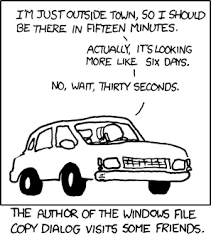
5) One PM to another- " I think 6 days should be fine for this. 6 sounds like a good number"

The project does not get executed on time.......the delivery fails

Scene 3

Retro : The aftermath
1) The kauravas claim the entire kingdom of the pandavas.

2) They also claim Draupadi.

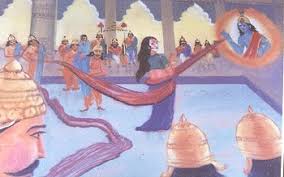
3) Draupadi is dragged into the court by her hair. There is an attempt by the Kauravas to strip her.

4) She prays to the god Vishnu to save her.

5) Vishnu saves her by making her Saari longer and longer till the Kauravas give up the attempt to strip her.

6) The "elders" appeal to good sense. Ultimately, the kingdom is given back to the Pandavas.

However, the pandavas have to spend 13 years in a jungle and 1 year "hidden". If they get caught, they have to repeat the punishment ad infinitum.

The pandavas go the jungle and start preparing for war.

Modern : The aftermath

1) The client fines the project company an enormous amount of money.

2) They ridicule the developer and condemn him to spend the next 1 year in office without holiday working 18 hours a day.

3) The developer prays to Vishnu to save him.

4) Alas!!! History does not repeat itself.(After all this is Kalyug!!!). No Krishna to save the developer.

5) There is a negotiation between "Directors". The client relents on the huge fine. The product must be developed in the next 6 months.

The last one month there should be no clarifications or communication with the client. If there is a clarification or communication, the client will change requirements and the product will take another 6 months of free development ad. infinitum.

The team goes back to the development center and starts preparing for the delivery.

Scene 4

Retro : The battle
1) The pandavas finish their punishment and go back to the Kauravas to claim their part of the kingdom.

2) The kauravas refuse to give them back their kingdom citing that they were caught during the hidden period and other technicalities.

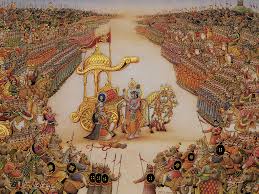
3) The battle lines are drawn. The pandavas approach "Bhisma" and all elders for help. "Bhisma" declines to help the Pandavas saying he is duty bound to help the Kauravs and the current king of Hastinapur.

War follows shortly.......a war of trickery, deceit and blood shed.....................


Modern : The delivery
1) The delivery team finishes the delivery and goes to the client for acceptance testing.

2) The client refuses to accept the delivery citing technicalities and quality problems.

3) The UAT lines are drawn. The developers appeal to the VP for help. The VP refuses saying that it is their duty to give good customer service and must accept the changed requirements calmly.

The UAT follow shortly....a hot pressure cooker UAT with daily developer attrition and drama.....

Aftermath
UAT is not war, but sometimes feels like it. The mahabharat happened due to pure gambling by the Pandavas. Software Estimation sometimes feels like the same. If the estimates go wrong the developers well have the same fate as that of Draupadi......we should look at getting our estimates right, our delivery perfect and harmony with our clients............watch the video below and have fun

Monday, September 7, 2009

Will Mickey Mouse and Jerry bring down Indian IT?

I am increasingly frustrated by some of the policies that are followed in top-tier IT companies in India. One thing that really irks me is the inability to bring in small eatables or drinkables(biscuits, fritos, kurkure) or even a can of coke to eat on my desk while programming.
My dream when I was a college kid was to have a bottle of coke(or pepsi) on the side, loud music banging through my ears and line and line of beautiful, world changing code being written.
But most IT companies, do not allow food inside the premises, some going to the extent of banning tea and coffe on the desk. It was not until I spoke to a F&L manager recently, that I understood the reason for this seeming idiosyncracy.

The reason was RATS!!!! Apparently, rat infestations are common. He highlighted an incident in a company he worked with, where RATS invaded the server rooms and tore the main cabling crippling the network.

I was aghast!! Million dollar servers running million dollars worth of software which keeps an army of 4000 people busy working, all bought down by Rats? (Not viruses/not malware/not theft/not hackers but rats). A scene right out of the Tom and Jerry comics.

There is no mention of rats in any ISO code or any other standard which data center people are supposed to follow. The problem of rats is surprisingly hard to solve. A simple google, did not find me one good simple(read cheap) solution to fixing the problem, other than calling in exterminators and putting a lot of rat poison.

Ofcourse, a knee jerk reaction to this is that many IT companies(who claim they are fun places to work in etc etc) , stop you from taking even small eatables into the company premises!!!! I personally believe that this is a huge dent in productivity. For some people programming and eating go hand in hand. For others, it is a time saving opportunity lost.

I am more saddended by the fact that none of the big IT companies I know off seem to be doing anything other than the obvious, "do not allow food" inside tactic. Many of them cite the excuse that Indians by their very nature are "sloppy" and "undisciplined" and cannot be trusted to keep premises clean enough to ward of rodents.

I am even more aghast at the fact that our big IT companies which employ millions of our best brains have not come up with innovative solutions to tackle this issue. I wonder, what such technological innovative solutions can be.

Granted, pest control is not in the domain of the normal "IT Engineer", however innovative solutions are. I can think of a few:

1) Wireless Networks- Go wireless wherever possible people. Makes things a whole lot easier.
2) Secure Cables- There must be something(Steel covering) to put on cables that would prevent mice from chewing on them
3) Poison- Ofcourse poisioning would be the best way to have Pest Control.

I would love to see if there are any more innovative ideas(I admit the ones listed above are a little lame.) to solve this problem.